Get a notepad and a pen before starting the training

Sri Ethiraj Alagananthan
Get a notepad and a pen before starting the training
Prepare to take notes on key concepts and scripts.
Put on headphones to avoid distractions while watching and practicing
Headphones help you focus and hear nuances in tonality.

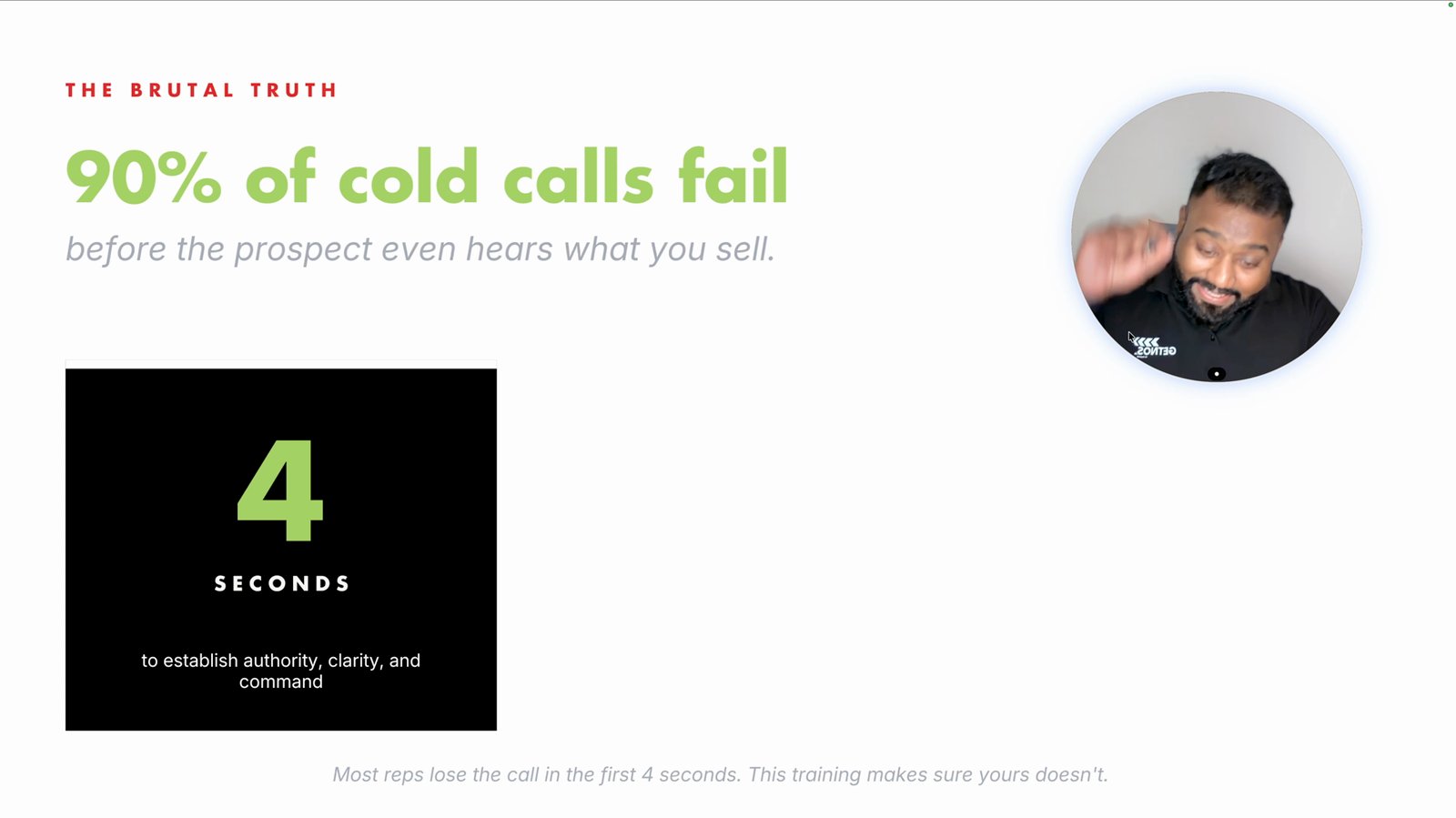
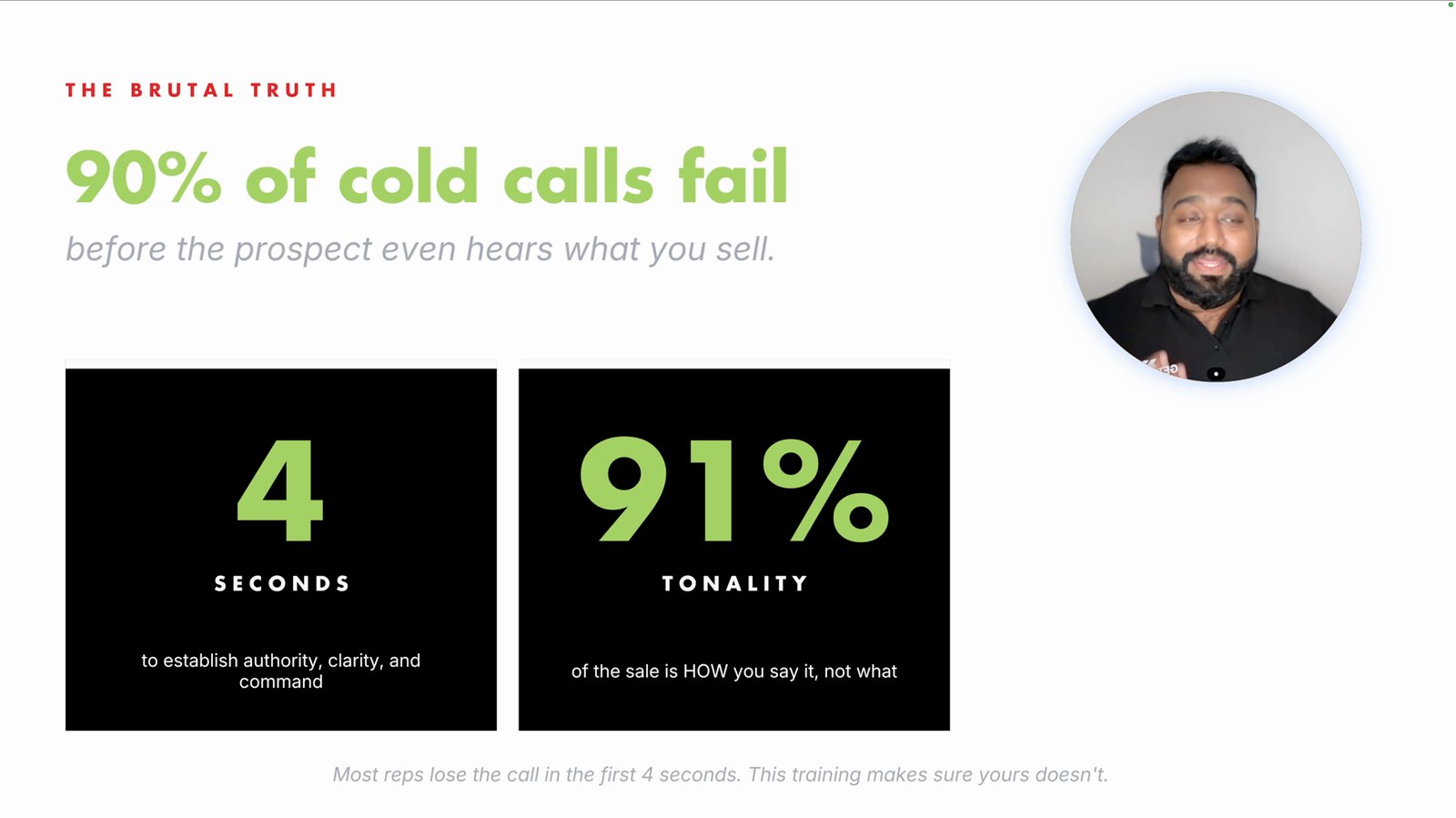
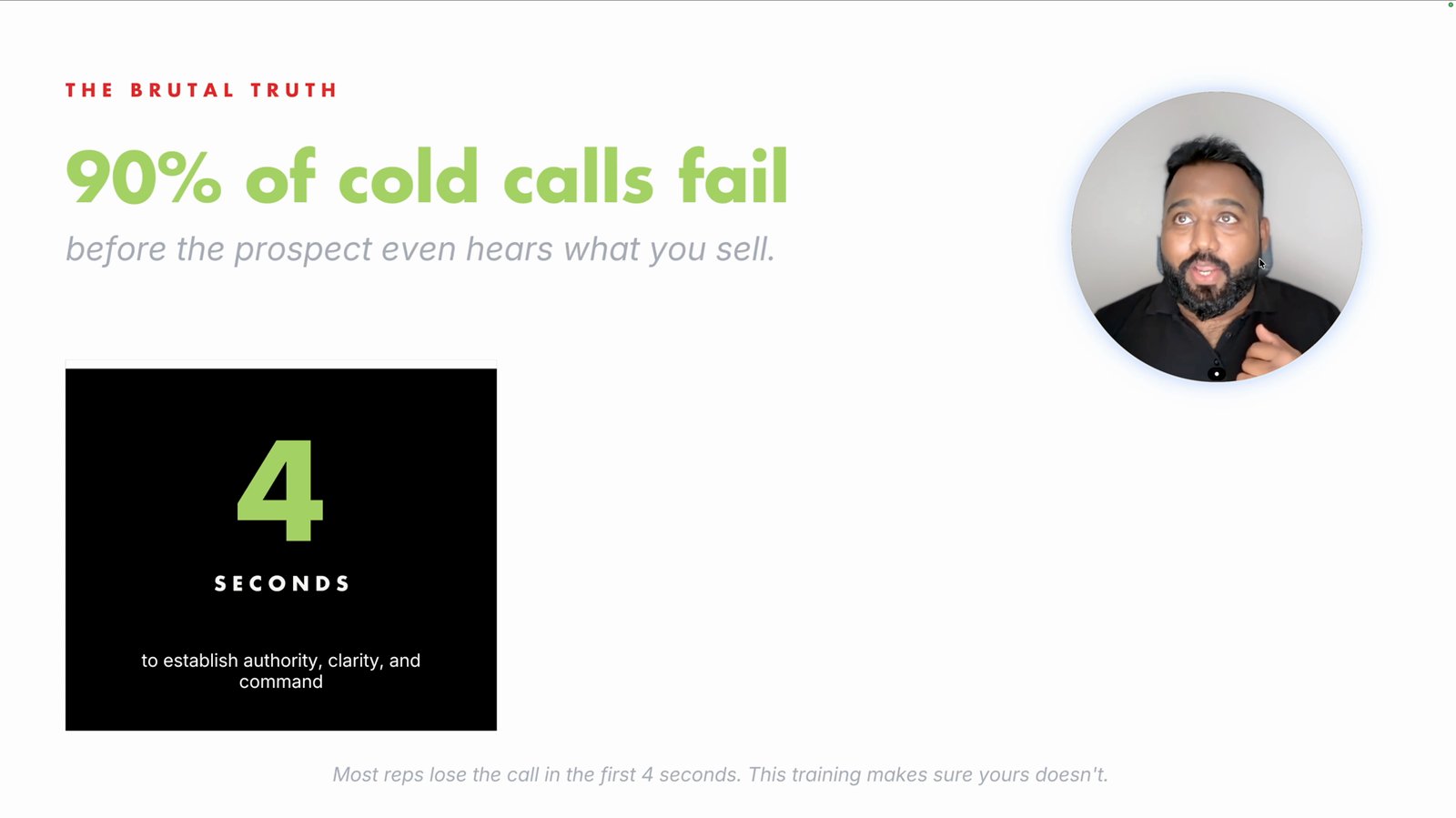
Write down the first four seconds rule: Establish authority, clarity, and command
This is the most critical part of the call.
Do some star jumps and push-ups before starting your calls
Physical energy translates to vocal energy on calls.

Use energetic tonality when introducing yourself on the call
Your voice should convey confidence and energy.
Avoid saying 'hello', 'good morning', 'good afternoon', or 'how are you' at the start of a cold call
These openers make you sound like every other salesperson.
Start the call by stating the prospect's name directly
E.g., 'John, it's [Your Name] here.'
Use a confident, rising inflection when saying your name and company
E.g., 'My name is Ethiraj from Getnos?'

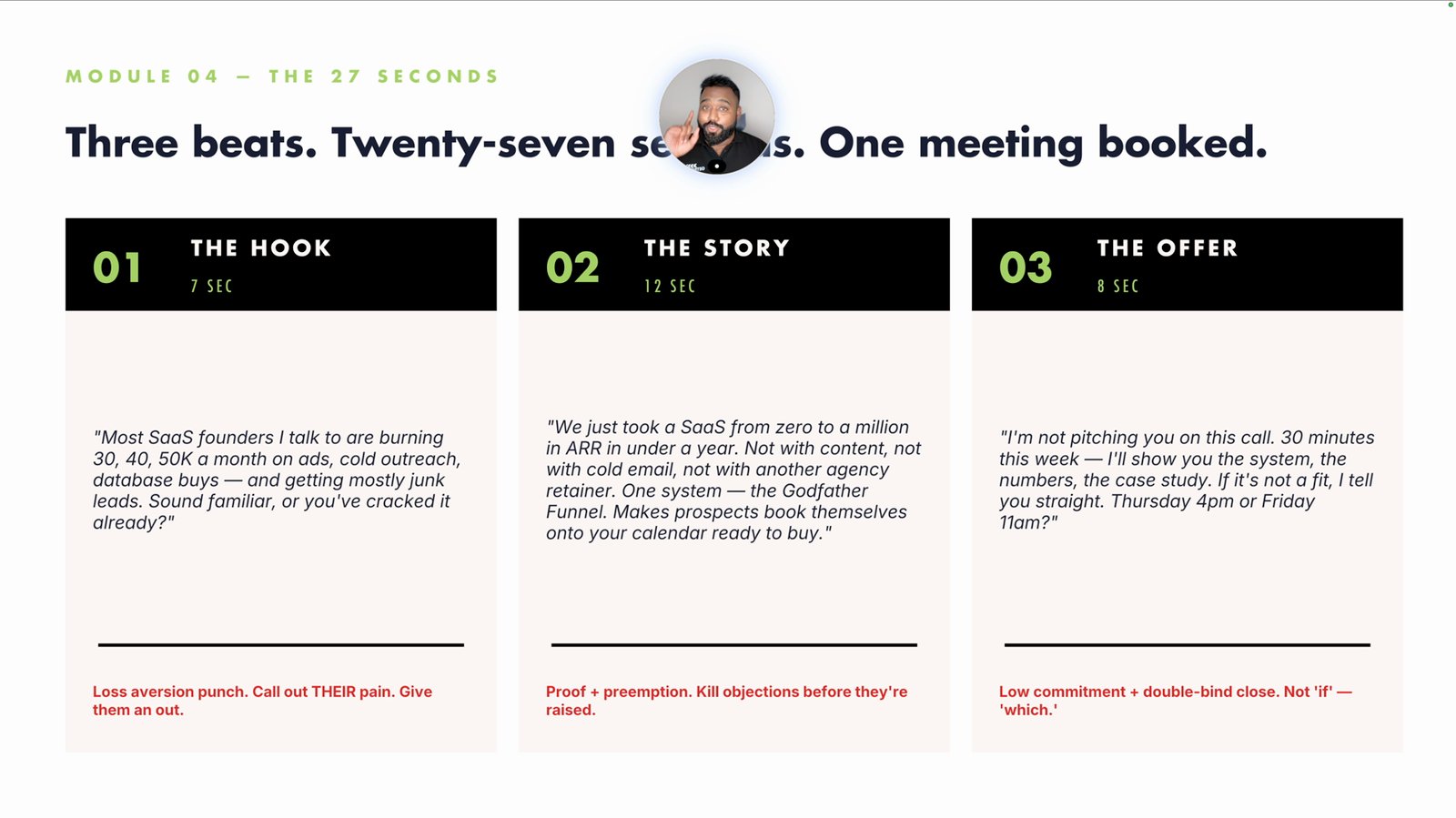
Clearly state that this is a cold call and give the prospect an out
E.g., 'This is a cold call. You can hang up or give me 20 seconds to tell you why I called.'

Memorize and write down your opening script with your name and company
Personalize the script for yourself.

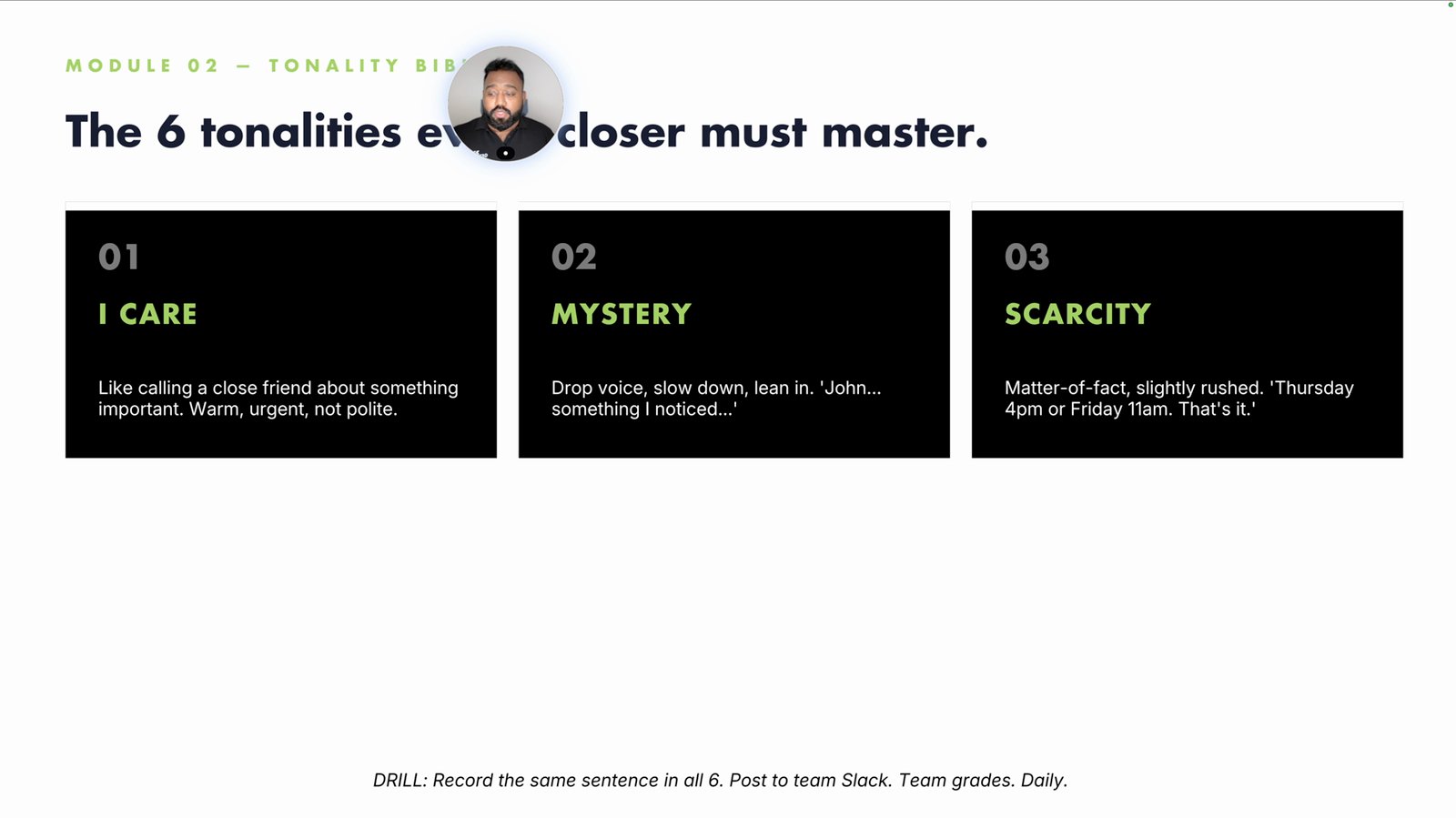
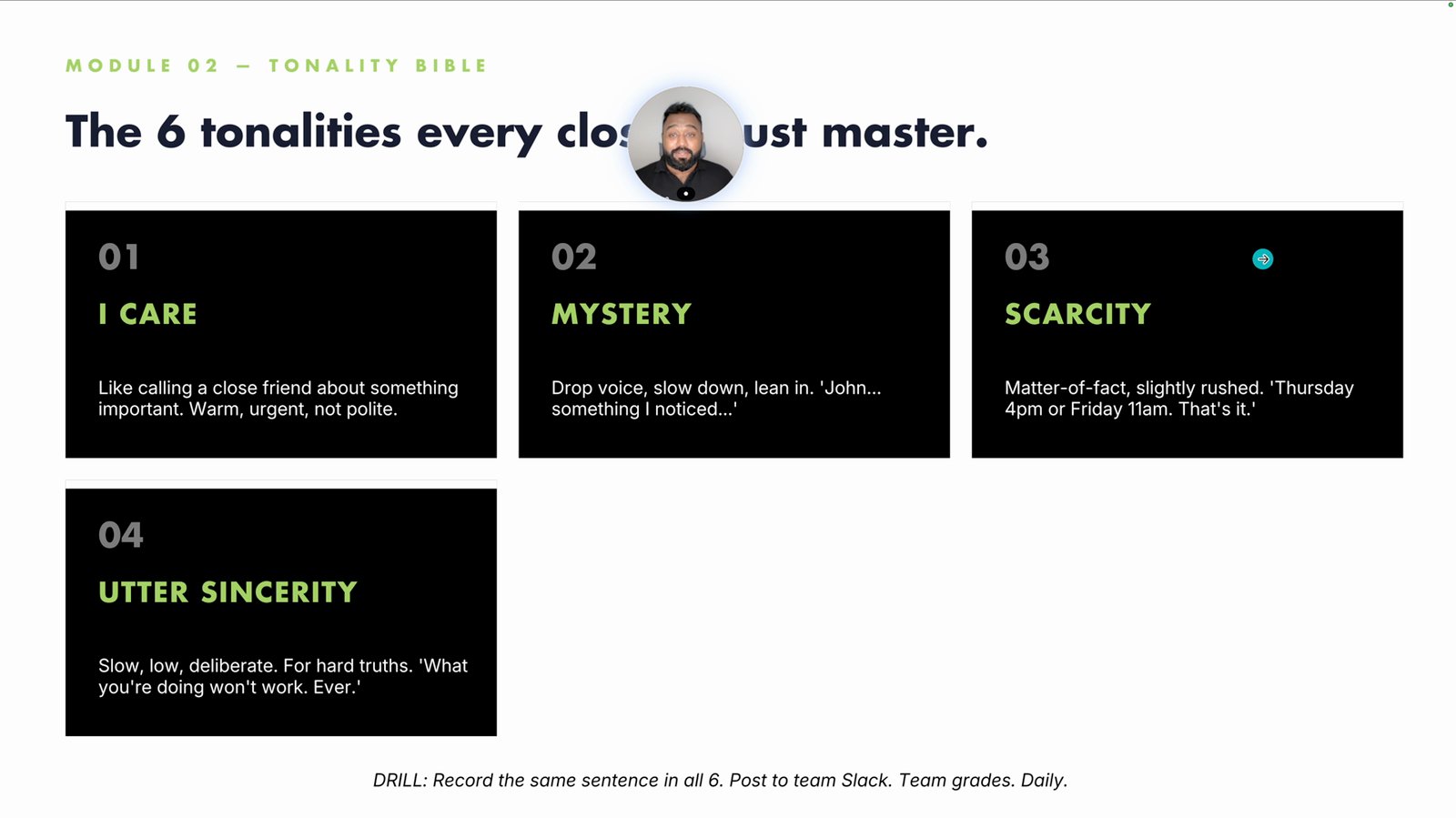
Practice the six tonalities: caring, mystery, scarcity, sincerity, reasonableness, and energy
Cycle through each tonality in your practice.

Use scarcity by offering only two time slots for the meeting
E.g., 'I have two slots available: Thursday at 7 or 8 PM.'
Slow down and use a low, deliberate tone for sincerity when discussing challenges
This builds trust and rapport.
Handle objections by reading the prospect's state, not their persona
Focus on their mood and engagement level.

If the prospect is resistant or gives short answers, ask a disarming question to open the mood
This can either end the call cleanly or open them up.

If the prospect is overly excited, slow them down and ask qualifying questions
Prevent getting trapped by excitement and move to qualification.

If the prospect is ready, ask smart, specific questions about their business
E.g., 'How did you get to one million? What was your product pricing?'
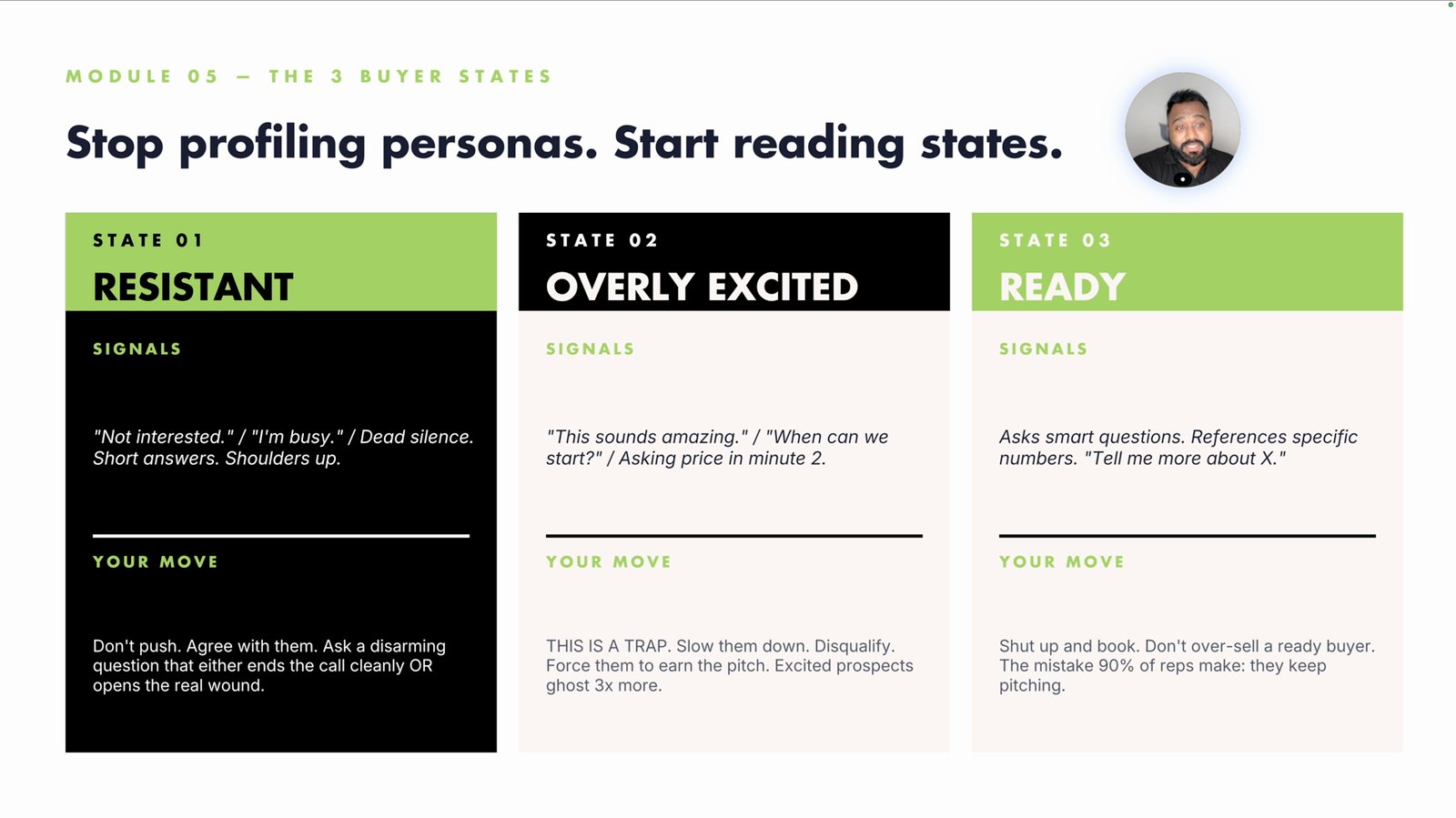
When the prospect is ready, book the meeting without overselling
Move directly to scheduling.

Never pitch price or features on the first cold call
Save detailed selling for the presentation call.

Use the objection arsenal: Prepare three responses for each common objection
E.g., 'I'm busy', 'Send me details', 'How much does it cost?'
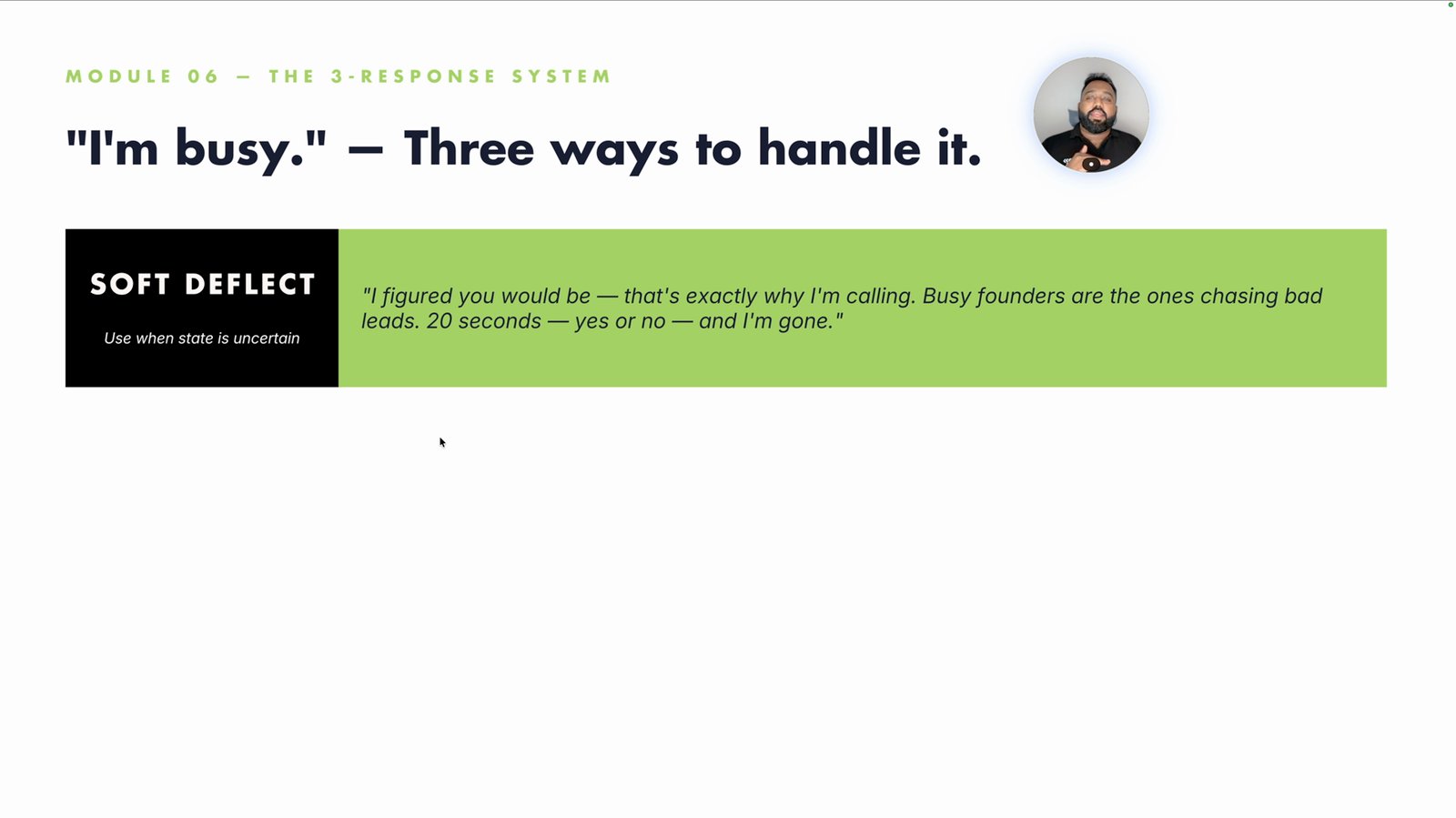
Deflect soft objections by acknowledging and reframing
E.g., 'I figured you'd be busy, that's why I'm calling.'
Challenge dismissive objections by highlighting the importance of investing time
E.g., 'If you can't invest 50 minutes to fix this, will it ever get fixed?'

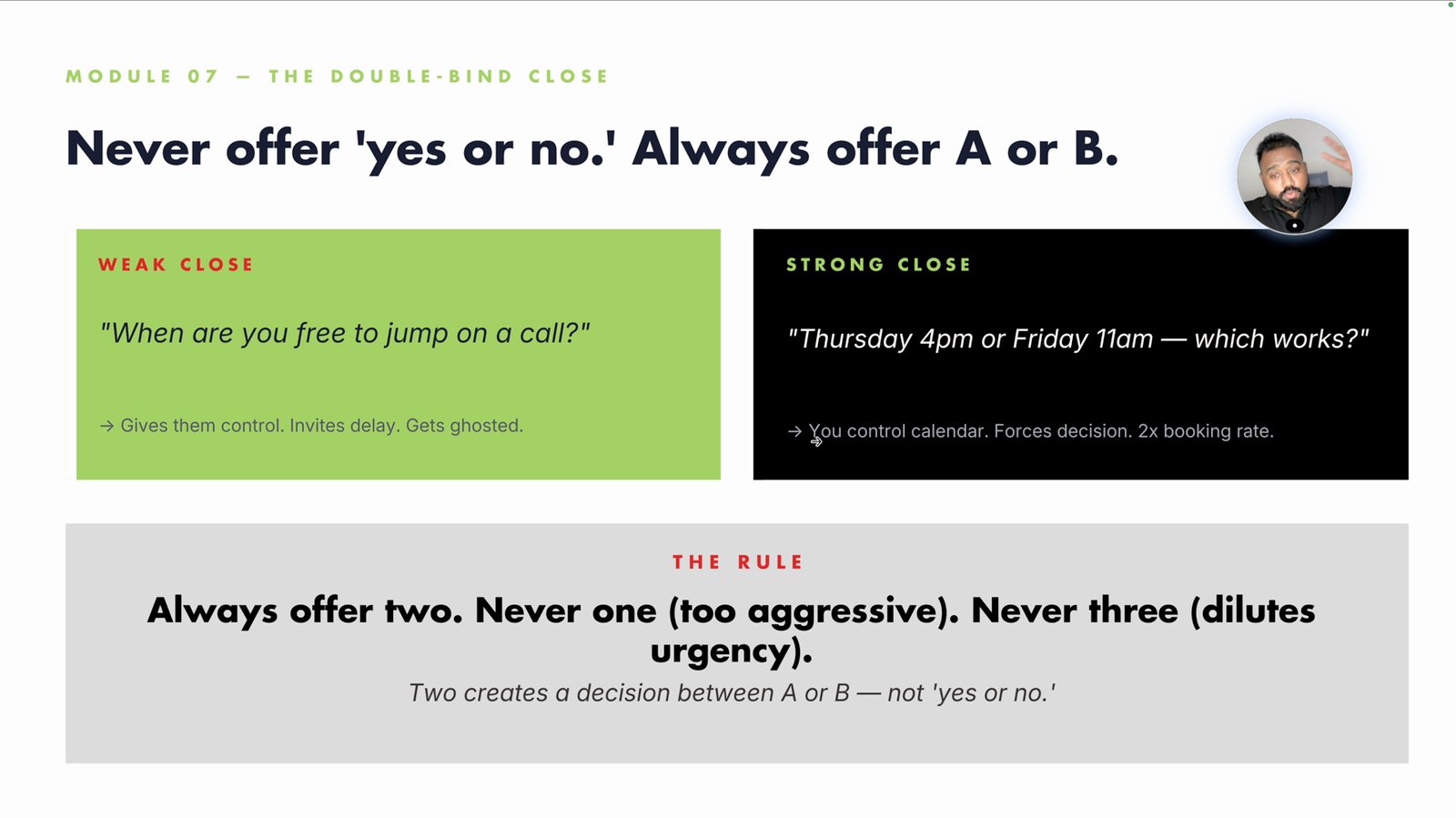
Always offer two time slots for the meeting, never just one
This increases booking rates and gives the prospect a choice.
Set a calendar invite with the prospect's name and your company for the meeting
Use Google Meet or your preferred platform.
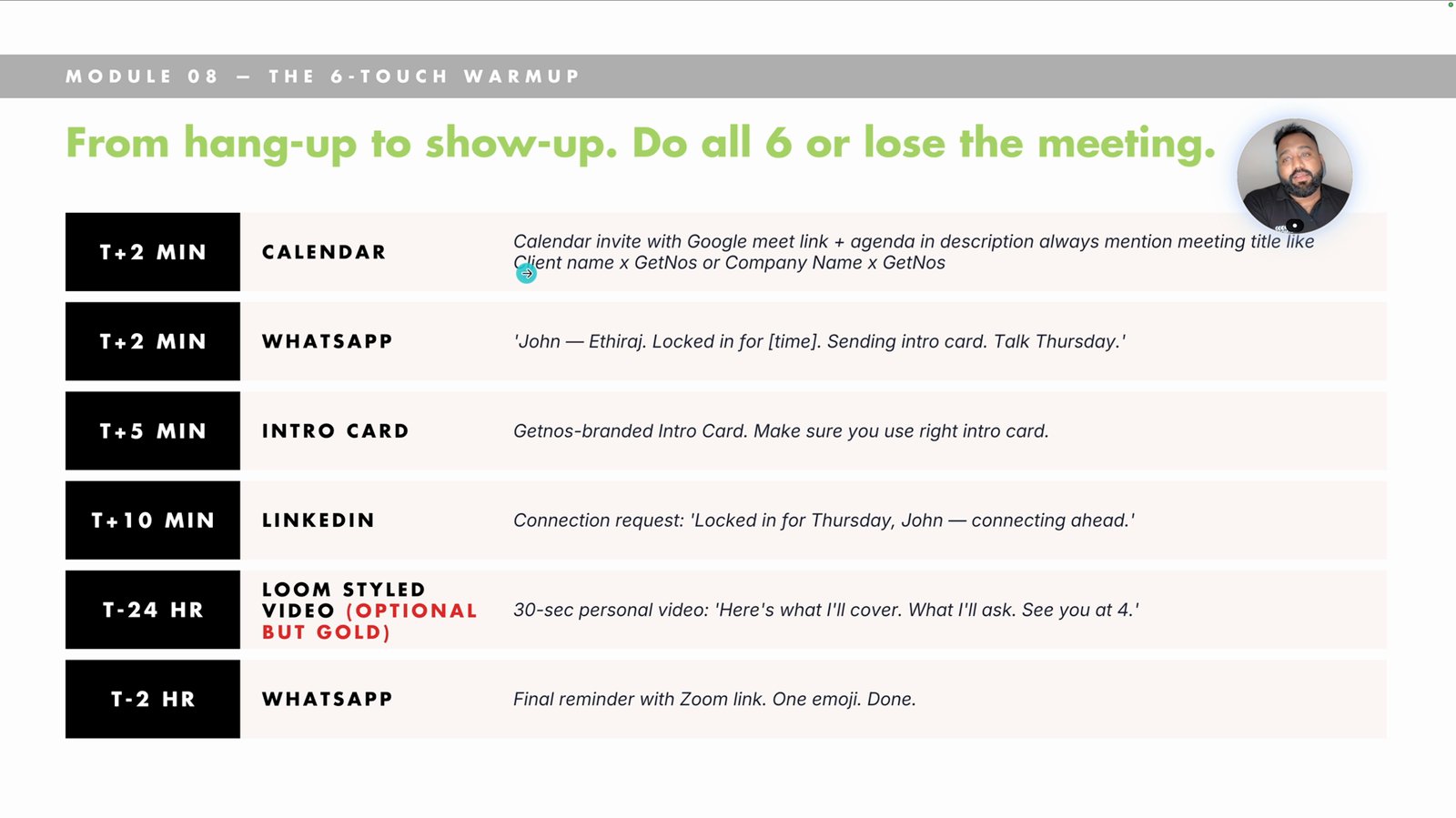
Send a personalized message and a voice note to confirm the meeting
This increases show-up rates.

Send a branded intro card to the prospect after booking the meeting
Personalized follow-up builds trust.
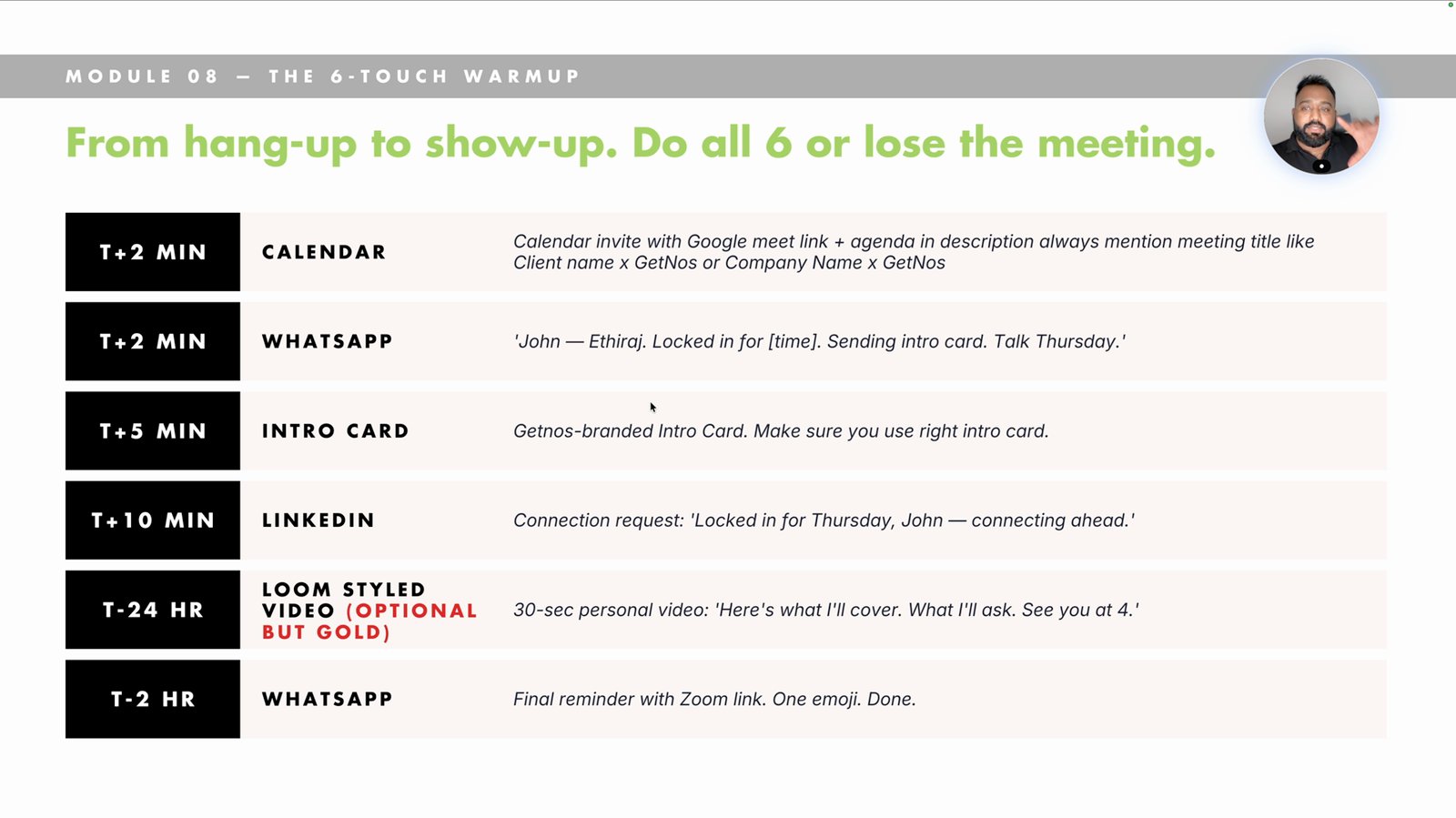
Send a connection request and message on LinkedIn before the meeting
Optional but helps with rapport.

Send a reminder message with an emoji before the meeting
Reminders reduce no-shows.

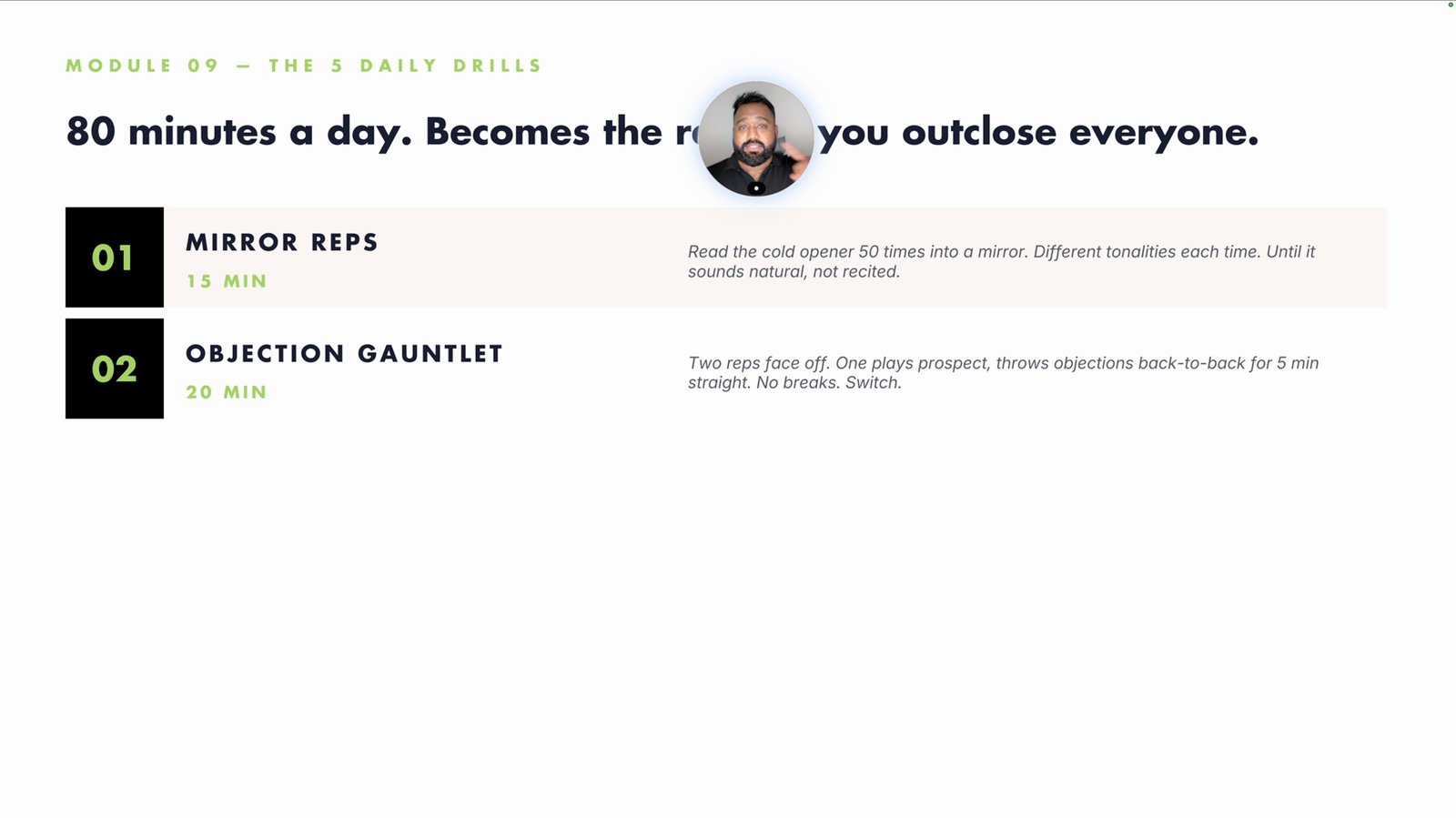
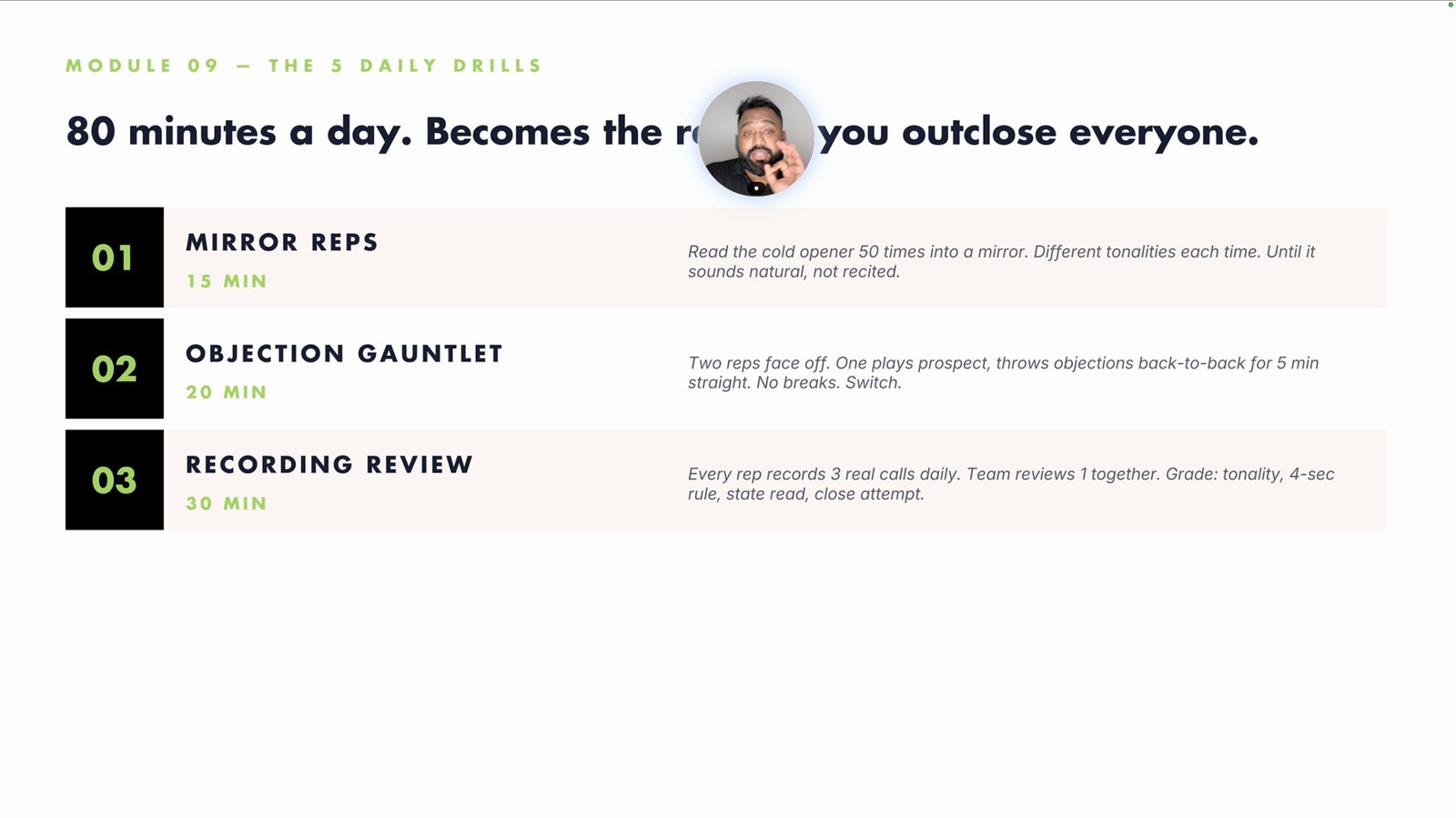
Drill your script and objection handling every day in front of a mirror
Repetition builds confidence and fluency.

Practice objection handling with a partner, role-playing both sides
Switch roles and throw objections back and forth for five minutes.
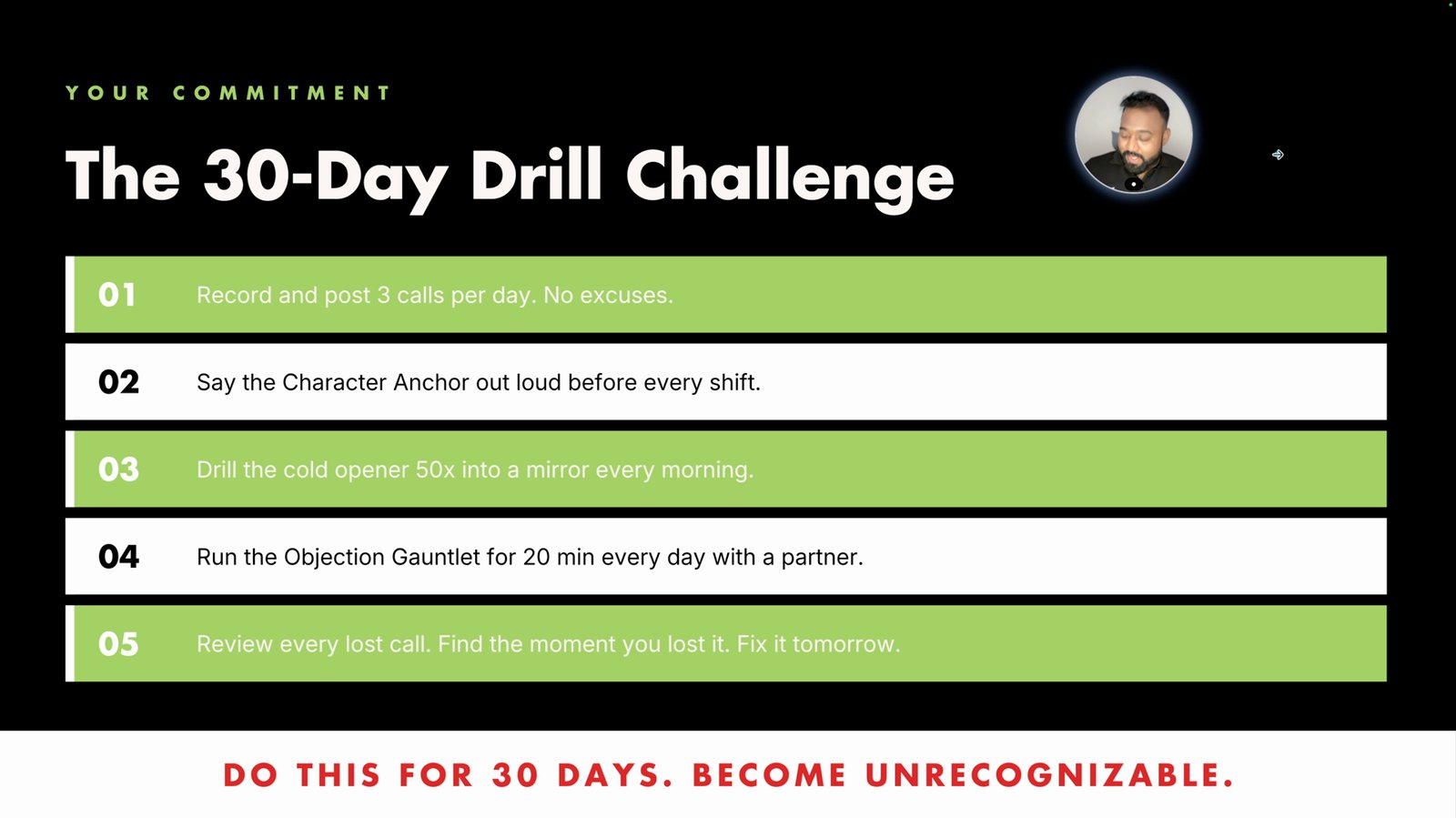
Record and review three real calls per day, focusing on tonality and the four-second rule
Team reviews and grades help you improve.
Test your six tonalities by reading one sentence in each and having your team guess which is which
If they can't tell, keep practicing.

Say your character anchor out loud twice before every shift
This primes your mindset for success.

Drill the cold calling open 50 times every morning in front of a mirror
Builds muscle memory for your opener.

Run objection handling drills with your partner for 20 minutes daily
Sharpen your responses to common objections.
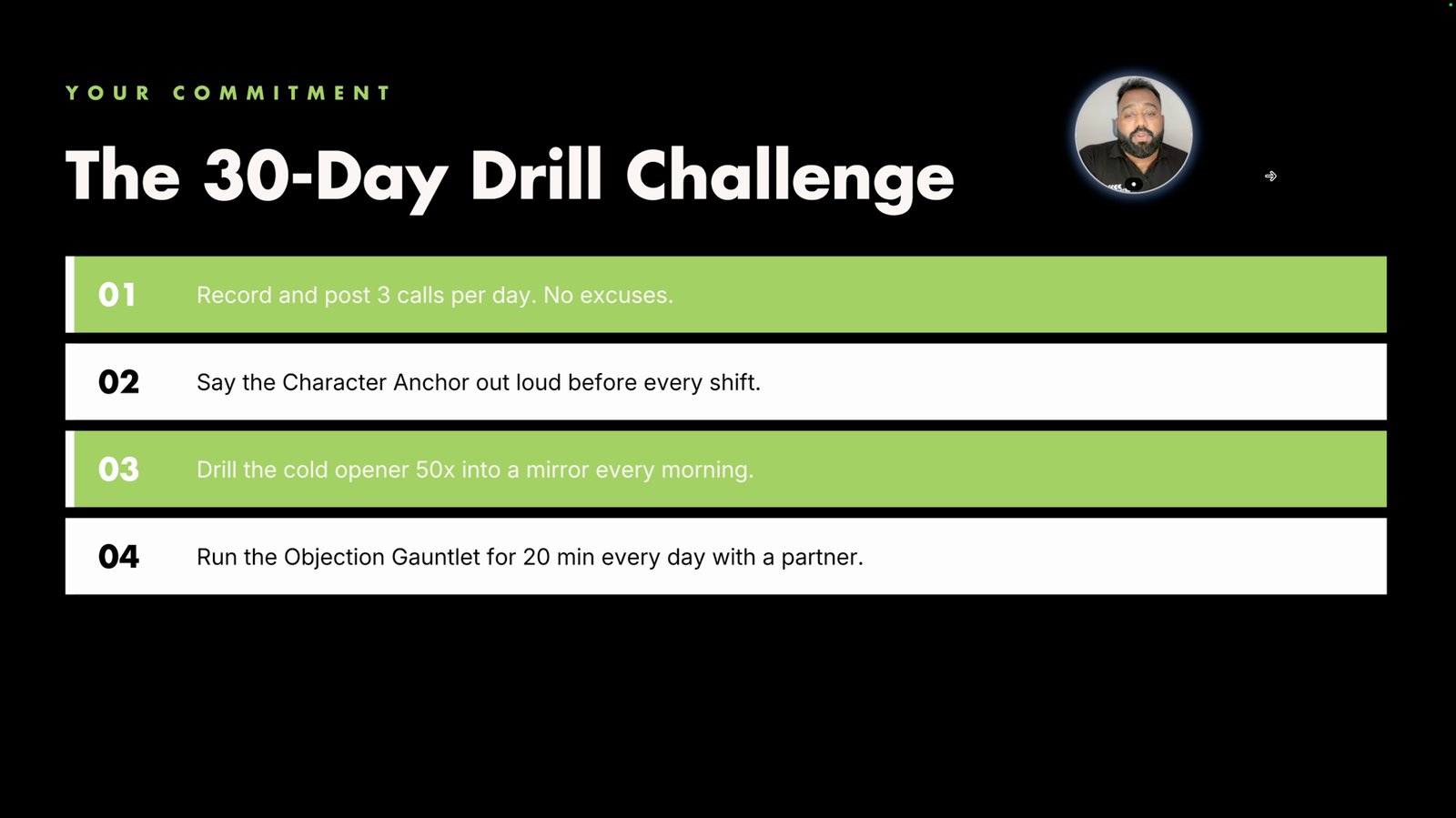
Review every lost call, identify where you lost the prospect, and fix it for next time
Continuous improvement is key.

Commit to 30 days of daily practice and drills to become unrecognizable in your skills
Transformation comes from consistency.
Treat every 10-digit phone number as an opportunity and apply the framework to every call
Every call is a chance to book a meeting.

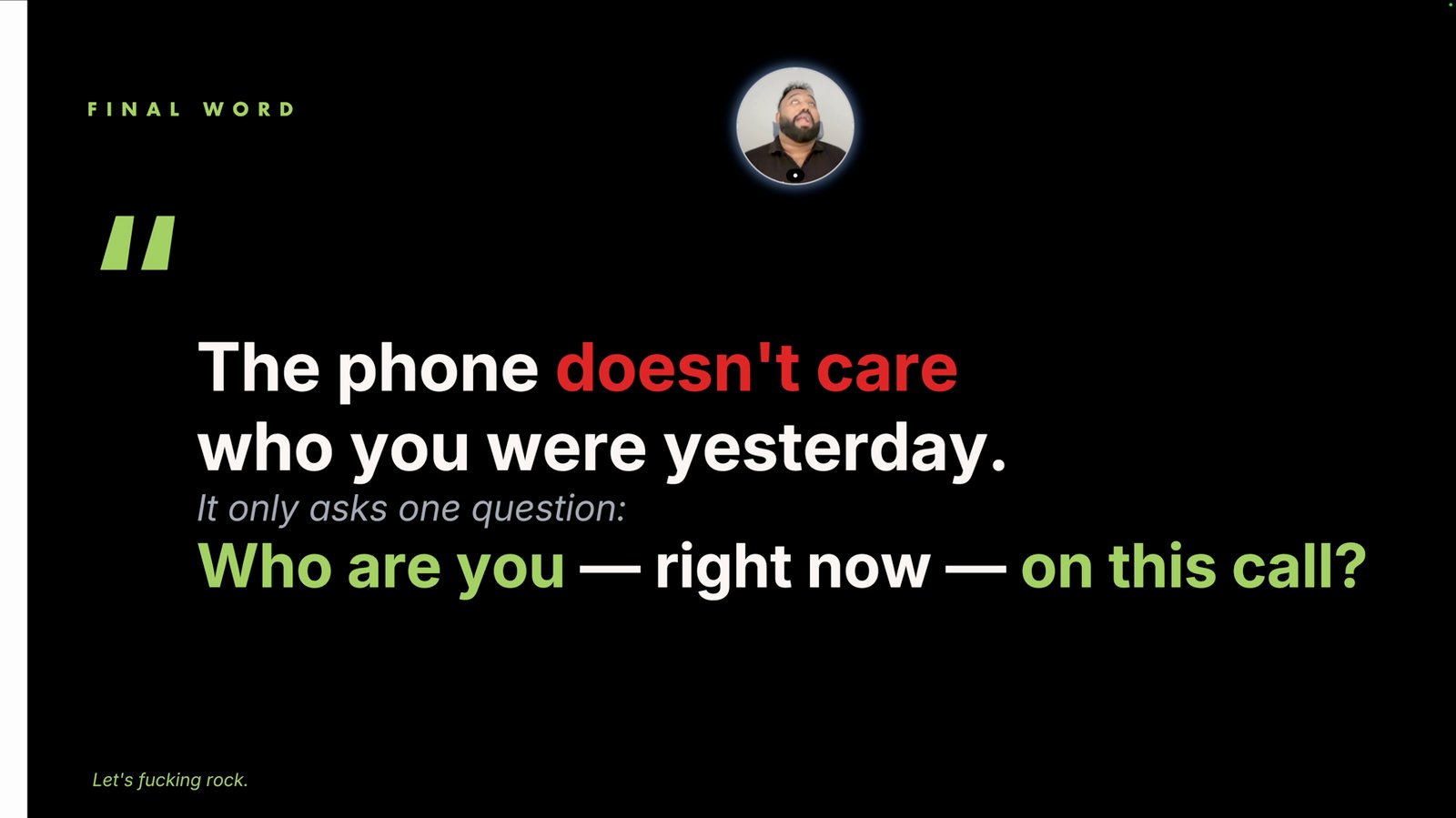
Remember: The phone doesn't care who you were yesterday, only who you are now
Bring your best self to every call.
You made it to the end!
39 steps complete