Practising Non-Fiction Essays with the PEEL Structure
Lesson report on writing non-fiction essays with PEEL (Point, Evidence, Explanation, Link): how to write each part, a plastic bag worked example, and homework.

M C
Homework due 15 November: write a PEEL body paragraph, using a smaller font size such as 9 if space is short. The focus is the Point and Explanation (clear opinion and reason).
Practising Non-Fiction Essays with the PEEL Structure
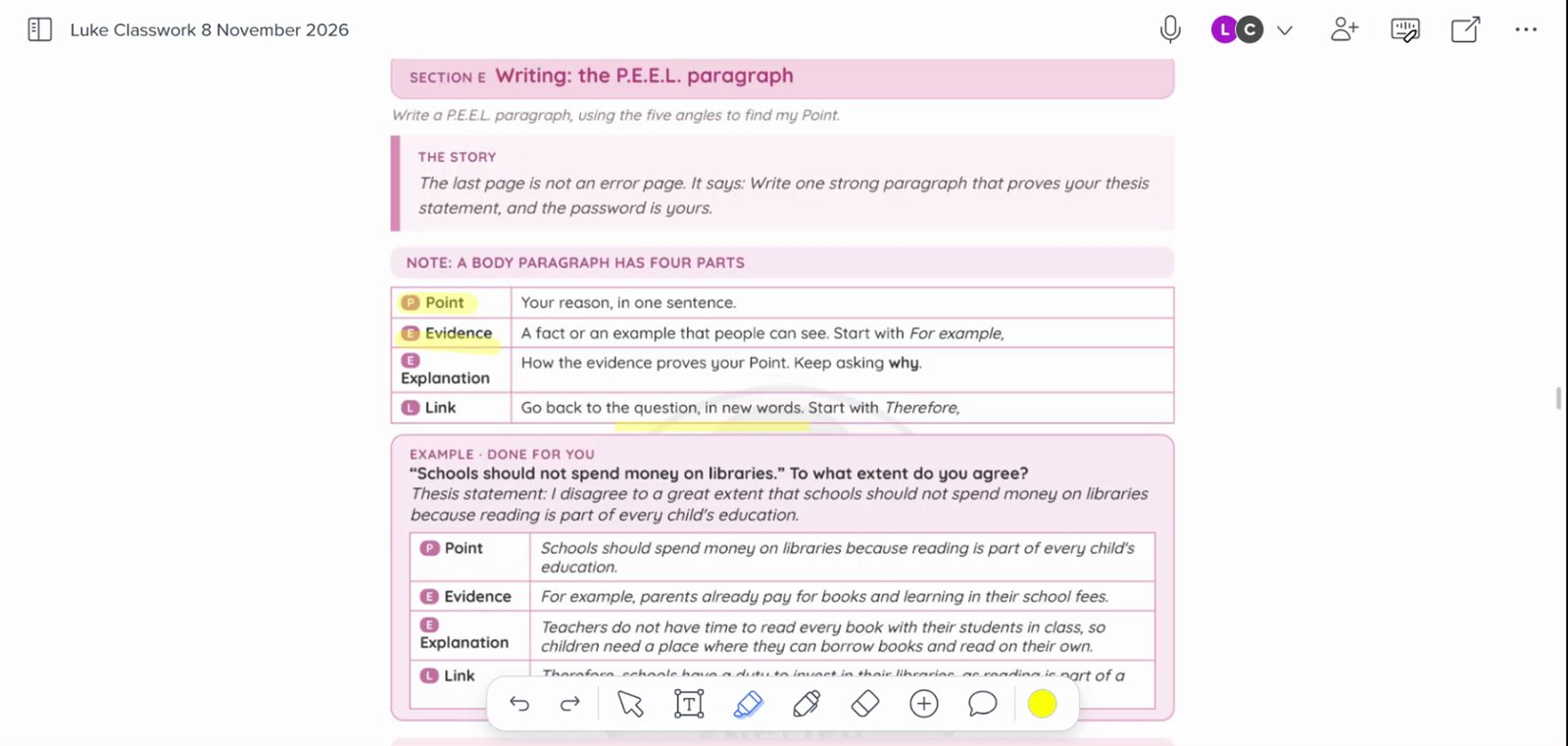
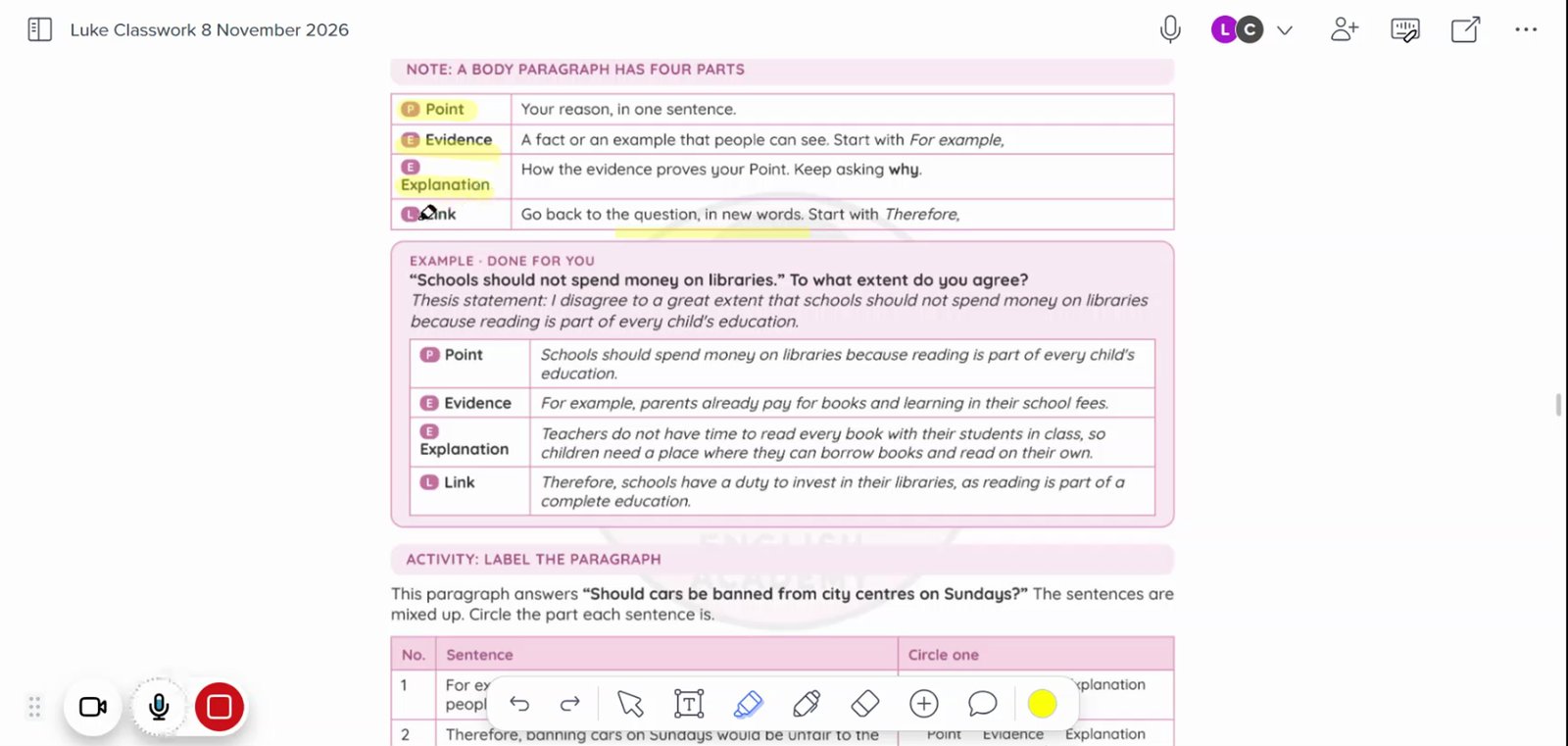
This session is a report of a lesson on writing non-fiction (expository) essays with the PEEL structure: Point, Evidence, Explanation, Link. The teacher says the page 8 order is the one to know thoroughly because it is used for every essay.
Fiction vs non-fiction memory aid: fiction starts with f like fake; non-fiction means not fake, so real.
Statement question: give a Yes or No answer. An 'To what extent' question: give your own view, often using 'it depends on' with conditions for agreeing and disagreeing. Responding the wrong way can lower the score.
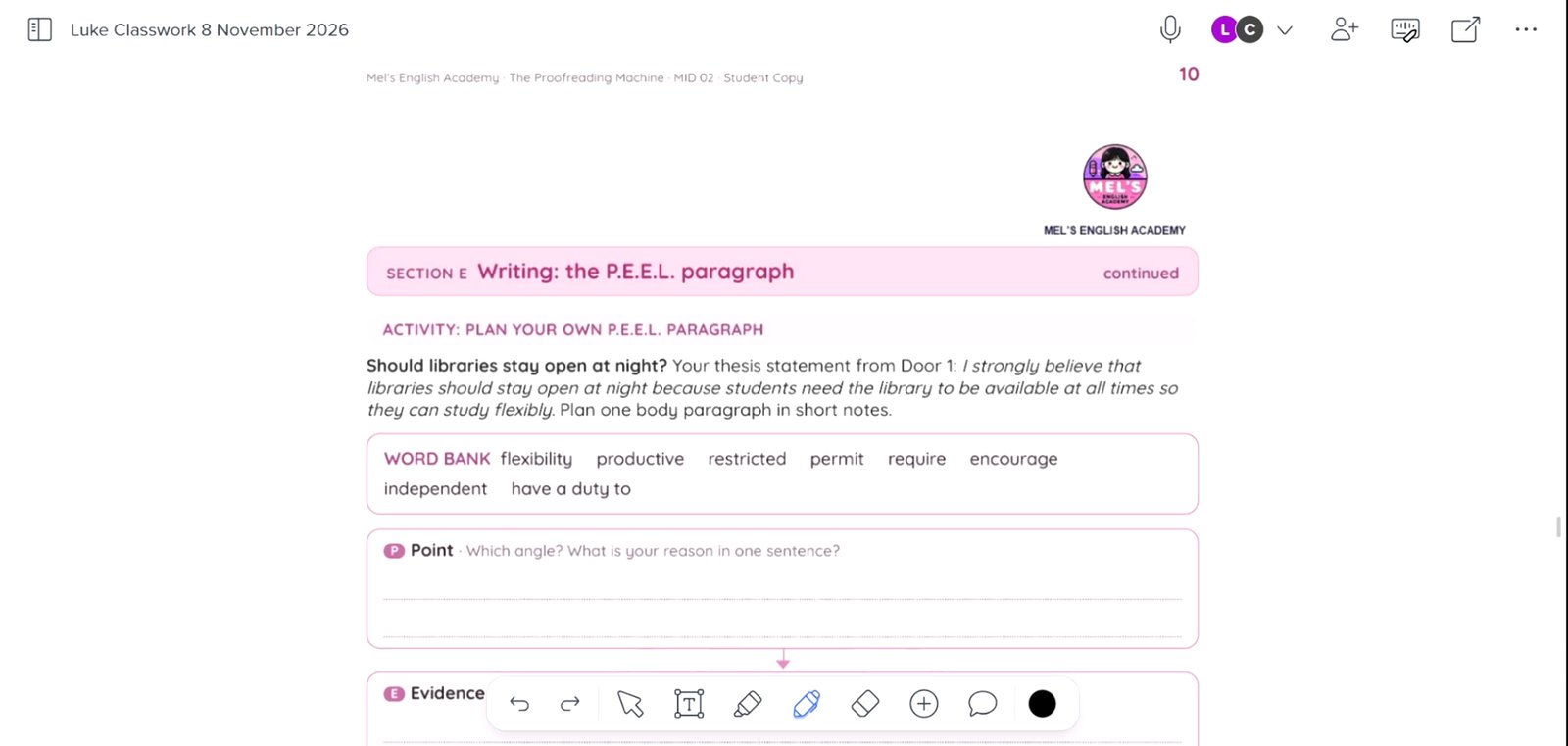
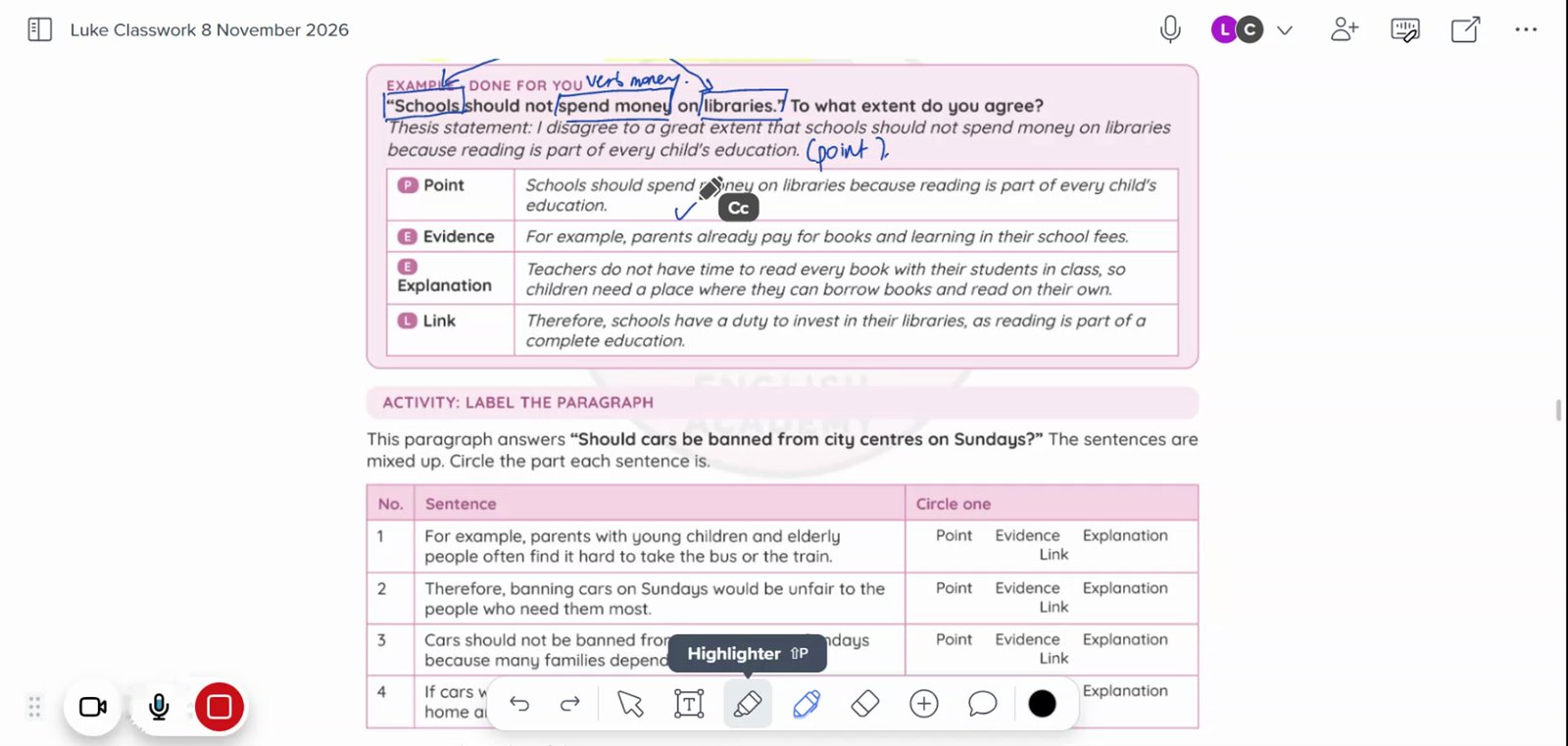
Write the Point as a one-sentence conclusion or summary that directly answers the essay question. It can be short and does not have to follow the evidence.
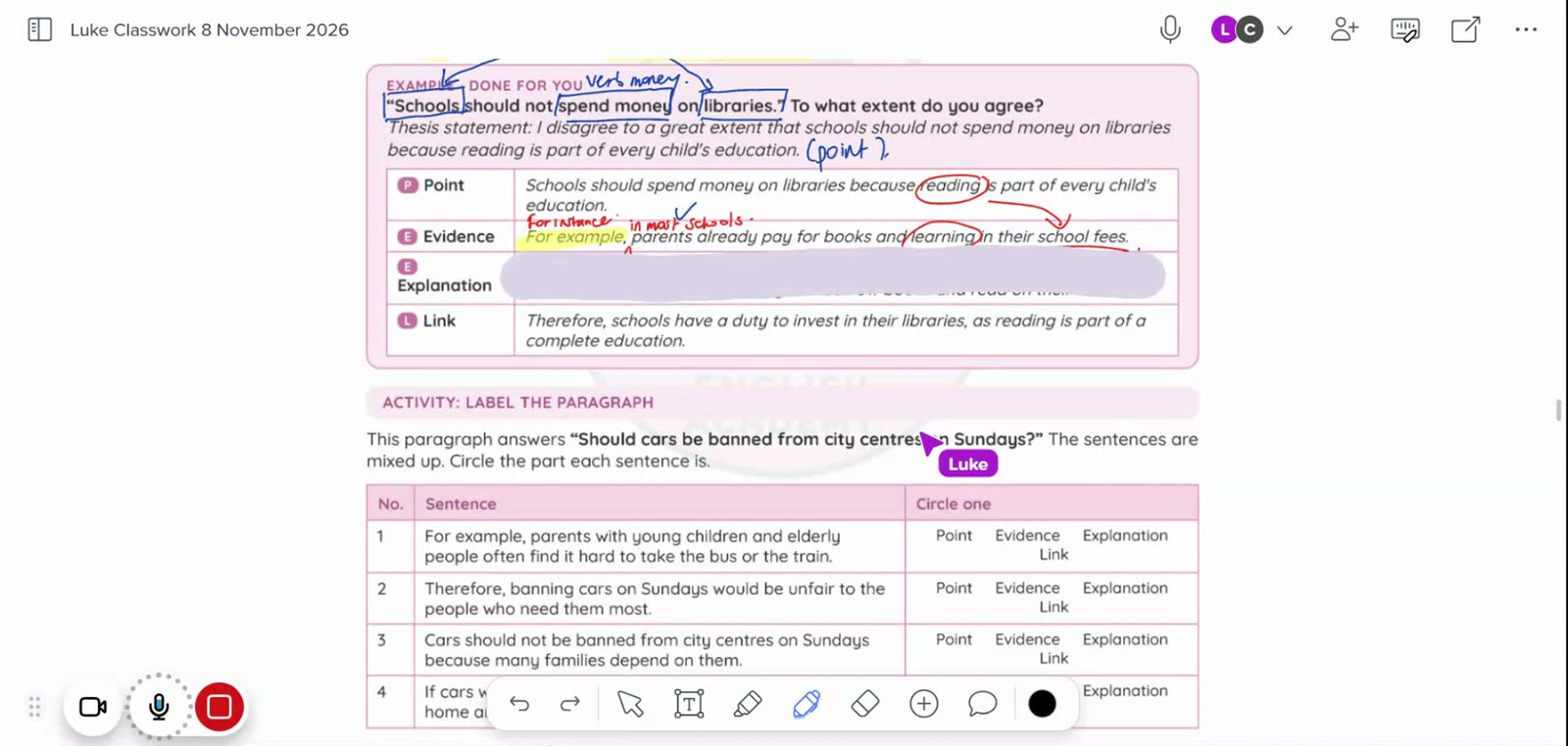
Introduce Evidence with 'For example' or 'For instance'. Use 'most schools' rather than 'all schools' when not every case applies.
Write the Explanation by explaining each key term in your evidence step by step, not by repeating the evidence. Define the nouns, and explain every part, including linking cause and effect.
Write the Link to answer the original question again, paraphrasing the Point in different words. A sentence starting with 'Therefore' that answers the question directly is a clue for a Link or Explanation.
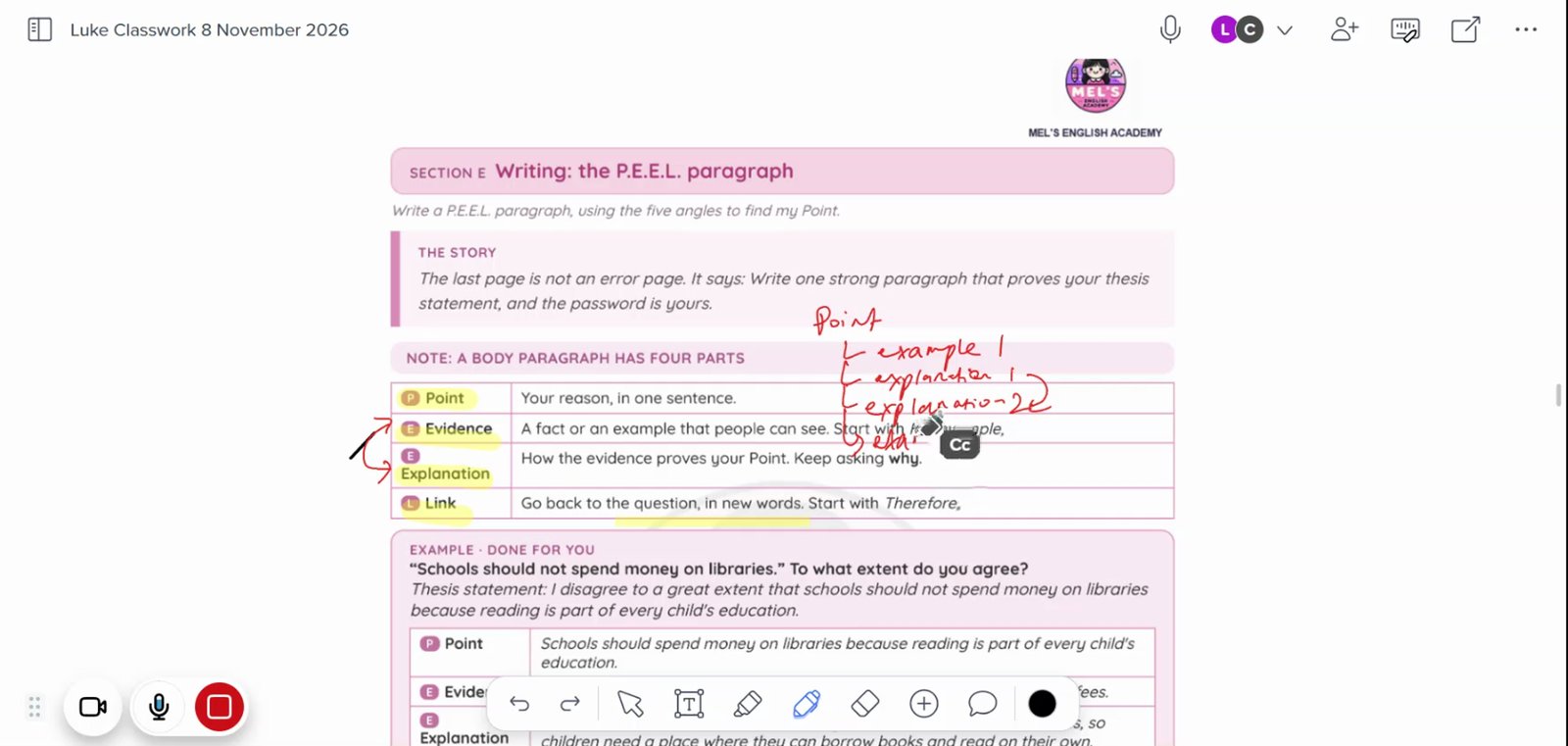
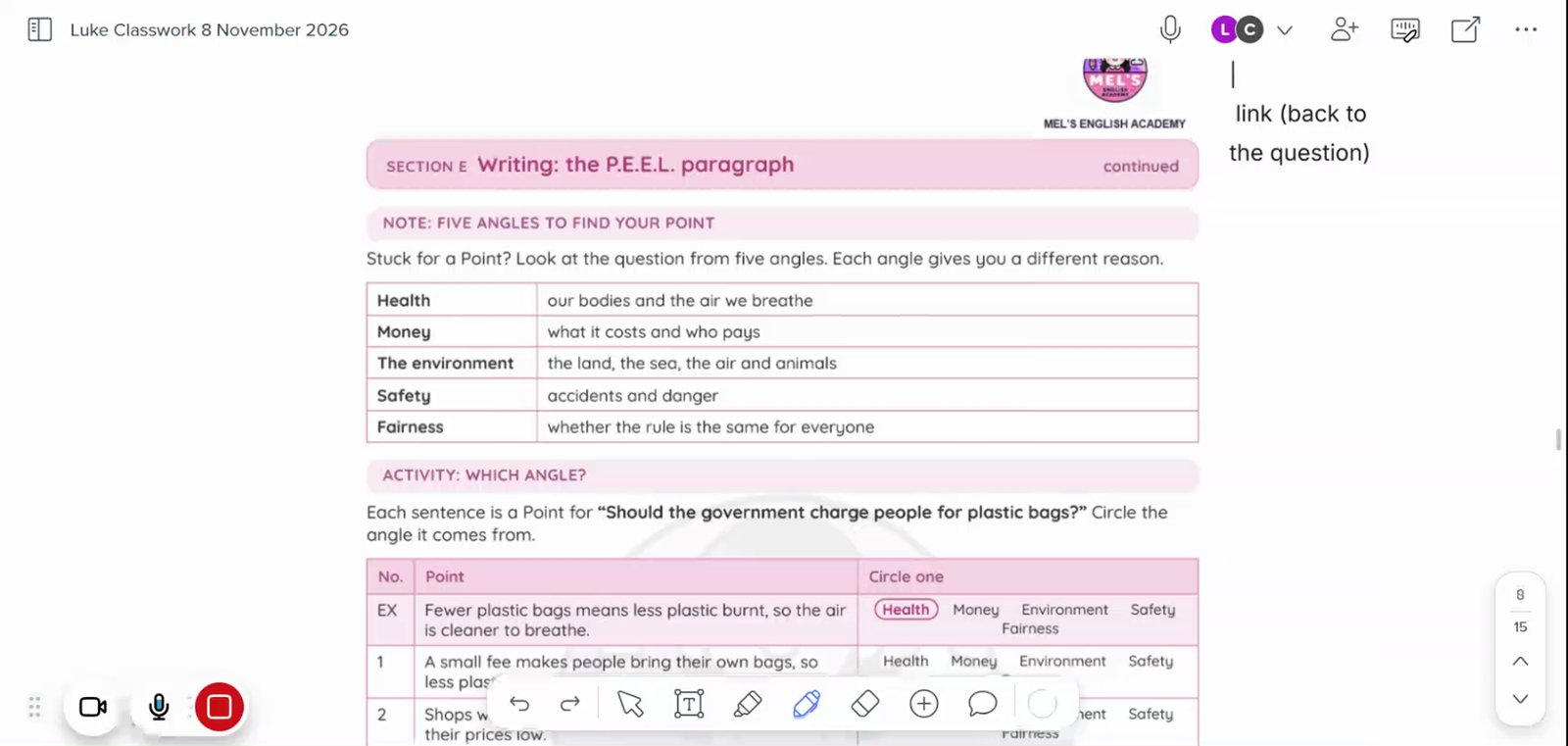
Five angles to find your point: health, money, environment, safety, fairness. Make the point specific so it does not mix two angles, for example safety for motorists and pedestrians versus environment.
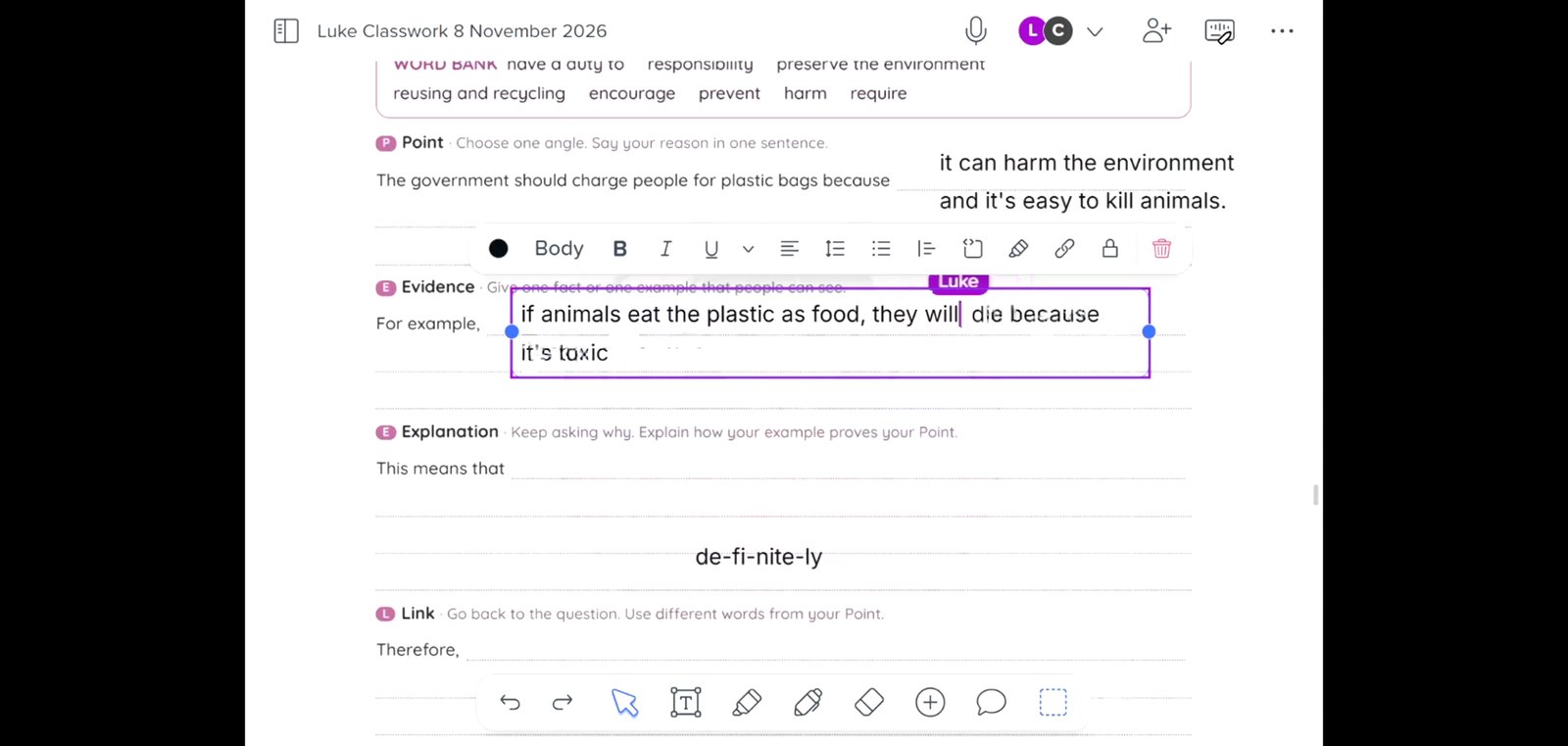
In an essay, do not use contractions. Use an apostrophe only to show possession, as in Luke's cat; write 'it is' in full.
10 of 14 steps shown
The guide's author needs to upgrade to share the remaining 4 steps.